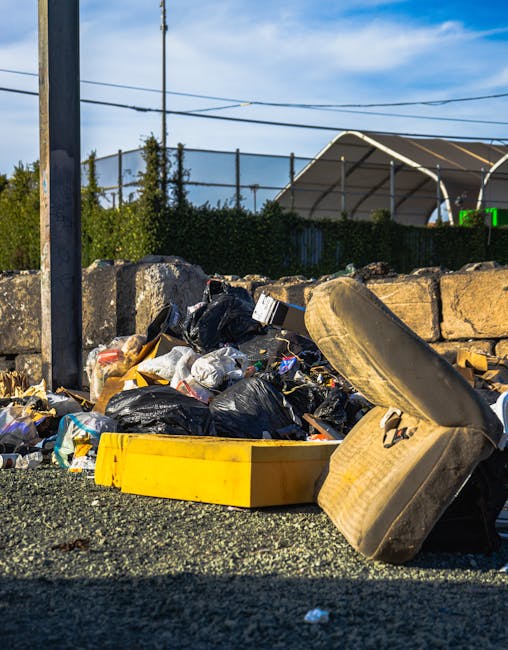
Wandsworth Council bulky rubbish rules for Tooting: a practical guide for households and landlords
If you are trying to clear a sofa, mattress, wardrobe, broken appliances, or a few awkward bits of junk in Tooting, the Wandsworth Council bulky rubbish rules can feel strangely specific. One minute you think it is simple, the next you are wondering what counts as bulky waste, what gets refused, and whether it is worth waiting for a council collection at all.
That is exactly what this guide is for. We will walk through how bulky waste is usually handled in Wandsworth, what residents in Tooting should check before booking, where the common traps are, and when a private clearance service may make more sense. No fluff. Just the stuff people actually need on a Tuesday morning when the hallway is full and the lift is, naturally, out of service again.
Why Wandsworth Council bulky rubbish rules for Tooting matters
Bulky rubbish is one of those household jobs that looks straightforward until you start lifting. A mattress leans against the wall. An old fridge sits in the kitchen doorway. A dining table is too large for the car, and you quickly realise the issue is not just disposal, it is access, timing, and what the council will or will not take.
For Tooting residents, the rules matter because they shape three things at once: cost, convenience, and compliance. If you follow the council process properly, you may be able to clear items in a controlled way without unnecessary hassle. If you get the details wrong, you can end up with missed collections, extra charges, or waste left out on the pavement longer than it should be. Not ideal, especially on a busy street with neighbours, bin day pressure, and the occasional fox showing far too much interest.
It also matters for sustainability. Bulky items are not always waste in the simplest sense. Some can be reused, repaired, or separated for recycling. That means the best option is not always the fastest option, and the fastest option is not always the cheapest one. A little planning goes a long way.
Expert summary: If your bulky items are clean, accessible, and council-eligible, a council collection can be a sensible route. If you have mixed items, tight access, multiple floors, or a hard deadline, a professional clearance option may be the calmer choice.
How Wandsworth Council bulky rubbish rules for Tooting works
In plain English, bulky waste rules are the conditions a local council uses to decide what it will collect, how it must be presented, and what may need a different disposal route. In Wandsworth, as in many London boroughs, residents usually need to book a collection rather than simply leaving large items outside whenever they like.
That booking step matters. Councils generally want items listed in advance so they can confirm eligibility and prepare the right vehicle or crew. They may also separate items by type, such as furniture, white goods, or electricals. Some items can be accepted only if they are safe to move, while others may be rejected if they are contaminated, broken in a hazardous way, or mixed with ordinary household rubbish.
For Tooting residents, access is often the practical issue. Flats above shops, basement homes, narrow stairwells, shared hallways, controlled parking, and permit-only streets can all affect what counts as a workable collection. Truth be told, the rules on paper are only half the story. The other half is whether two people can actually carry the thing without blocking the entrance or denting the banister.
Typical bulky waste examples include:
- sofas and armchairs
- mattresses and bed frames
- wardrobes, chests of drawers, shelving and cupboards
- tables, desks and chairs
- small appliances and larger electrical items
- miscellaneous household items that are too large for normal bins
Items that often need extra care or a different route include fridges and freezers, construction waste, soil, paint, gas cylinders, and anything that could be classed as hazardous. If you are unsure, do not guess. That is where people tend to run into trouble, and not the fun kind.
Key benefits and practical advantages
Following the council route has real advantages, even if it is not always the most flexible option.
- Clear rules: You know what the council is likely to accept, which reduces random surprises.
- Local control: Collections are tied to the borough, so the process is designed around local streets and housing types.
- Reduced fly-tipping risk: Using a legitimate collection or licensed clearance route helps avoid waste being dumped illegally.
- Potentially lower cost for a small number of items: For modest clear-outs, the council may be the cheaper choice.
- Better recycling outcomes: Bulky items can often be sorted for reuse or recycling rather than just thrown into mixed waste.
There is also peace of mind. You are less likely to wonder whether the waste was handled properly. That matters, especially if the clearance involves a tenancy end, a family move, or a landlord inspection. When the deadline is close, a system that feels predictable is worth a lot.
If you are comparing local options, it can help to look at broader clearance services too, such as house clearance or furniture disposal, especially if the job is bigger than one or two items. Those services can be useful when the council route is too narrow for the amount or type of waste.
Who this is for and when it makes sense
This topic is mainly for Tooting residents, but the real world is broader than that. The rules affect homeowners, tenants, landlords, letting agents, estate managers, and anyone dealing with a house move or a post-renovation clear-out.
It is especially relevant if you are:
- moving out of a flat and need to clear bulky furniture
- replacing old sofas, mattresses, or bedroom furniture
- managing an end-of-tenancy clean-up
- helping an older relative downsize
- emptying a garage, loft, or spare room
- dealing with one-off items that will not fit in normal bins
There are also times when the council route makes less sense. For example, if you have a mixture of furniture, bags, boxes, and oddments from a whole-property clear-out, the appointment can become awkward very quickly. A dedicated flat clearance or home clearance service may be easier because the whole job is handled in one go.
And yes, that includes the classic "we only meant to get rid of one bed" situation that somehow turns into three chairs, a broken shelf, and an old printer nobody remembers buying.
Step-by-step guidance
Here is the safest way to approach bulky rubbish in Tooting without creating avoidable drama.
- Identify every item. Make a short list of what needs to go. Separate furniture, electricals, metal items, and anything potentially hazardous.
- Check condition and access. Ask yourself whether the item can be safely carried out of the property and whether stairs, corners, and door frames are manageable.
- Decide whether reuse is possible. A serviceable table or chair may be better passed on or reused instead of classed as waste.
- Confirm the collection route. Decide whether to use the council system or a private clearance option based on timing, item type, and volume.
- Prepare the items properly. Remove loose contents, empty drawers, tape shut anything that may open, and keep the pathway clear.
- Place items where instructed. If a collection requires curbside placement, keep the items neat and accessible, not blocking pedestrians, driveways, or shared entrances.
- Keep an eye on exclusions. If the item is not accepted, do not just leave it out and hope for the best. That is how clutter and complaints start.
A small but useful tip: take a photo of the items before collection. Not because anyone expects a dramatic evidence folder, but because it helps you keep track of what was included. Handy when your list is long and the day feels a bit chaotic.
Expert tips for better results
Experience shows that most bulky waste problems are not really about waste. They are about planning.
Start with the access route. Measure door widths if the item is awkwardly shaped. Check for low ceilings on stairs. In Tooting's older terraced homes and converted flats, a sofa can look manageable from the lounge and then become a complete nonsense problem on the landing. Happens all the time.
Sort by type before you book. Furniture, electricals, and general junk should not be lumped together unless the collection service clearly allows mixed loads. If you have mixed waste, a broader waste removal service may fit better than a simple bulky collection.
Use the weather to your advantage. Early morning collections can be easier in summer, while wet weather makes cardboard, soft furnishings, and mattresses heavier and messier. Not glamorous, but it makes a difference.
If the items still have value, keep them separate from waste. A decent chest of drawers with only minor wear can often be passed on or reused. Once it gets mixed with rubbish, it loses flexibility fast.
For larger property jobs, it can be smart to combine bulky waste with a more complete clearance plan. For instance, if the loft is full of old furniture, you may need loft clearance rather than just a one-off waste pick-up. That saves time and keeps the process tidier.
Common mistakes to avoid
Most residents only make bulky waste mistakes once. That is usually enough.
- Leaving items out too early: This can create obstruction and complaints, especially on narrow Tooting streets.
- Mixing accepted and rejected items: One bad item in the pile can spoil the whole collection.
- Assuming every large item is eligible: White goods, hazardous waste, and construction waste may be treated differently.
- Forgetting access limitations: A collection booked on paper may still fail if the crew cannot safely reach the items.
- Ignoring parking and front-door logistics: In London, this can be the difference between a smooth job and a stressful one.
- Using unlicensed disposal channels: If someone offers a suspiciously cheap pickup from a van with no paperwork, be careful. Very careful.
Anecdotally, the biggest frustration is usually not the fee itself, but the delay caused by a preventable issue. A sofa left in the wrong place or a mattress wrapped badly can derail a perfectly good booking. Simple, but annoying.
Tools, resources and recommendations
You do not need specialist equipment for a basic bulky waste job, but a few practical tools can make life much easier.
- Measuring tape: Useful for checking whether furniture will fit through doors and stairwells.
- Heavy-duty gloves: Helpful for sharp edges, splinters, and dirty handling points.
- Blankets or cardboard: Good for protecting floors and door frames while moving large items.
- Strong tape or straps: Useful for securing drawers, lids, or loose parts.
- Phone camera: Handy for documenting item condition and the final setup before collection.
On the service side, it helps to compare the task against the likely scale of the work. A single sofa or mattress is one thing. A multi-room clear-out is something else entirely. That is why services like furniture clearance, garage clearance, or house clearance may be more appropriate for bigger jobs.
For businesses or landlords dealing with repeated disposals, a more structured solution may be better still. You might look at business waste removal or office clearance if the waste is commercial rather than domestic.
Law, compliance, standards, or best practice
Bulky rubbish disposal sits inside a wider set of UK waste responsibilities. The key principle is simple: waste should be handled safely, responsibly, and by a proper route. That includes preventing fly-tipping, avoiding nuisance, and making sure items do not cause hazards on pavements or in communal areas.
For residents, the main practical compliance point is to follow the collection rules that apply in the borough and to present waste only in the way instructed. For landlords, agents, and businesses, the expectations are a bit higher. You should be confident that waste is transferred to a legitimate operator and that the disposal route is suitable for the type of material involved.
Best practice usually means:
- sorting items before collection
- not mixing hazardous and non-hazardous waste
- keeping access routes safe and clear
- using a licensed and insured provider where appropriate
- choosing reuse or recycling where possible
At a practical level, that is what most people want anyway: no mess, no headaches, no mystery about where the rubbish ends up. If you value reassurance, look closely at provider standards such as insurance and safety and recycling and sustainability. They are boring-sounding pages, perhaps, but they tell you a lot about how seriously a company treats the job.
Options, methods, or comparison table
There is no single best option for every bulky waste job. The right choice depends on quantity, urgency, access, and whether the items are reusable or mixed with other waste.
| Option | Best for | Pros | Watch-outs |
|---|---|---|---|
| Council bulky waste collection | Small numbers of eligible household items | Simple, local, often cost-effective | Limited item types, booking restrictions, access rules |
| Private bulky waste removal | Faster turnaround or awkward access | More flexible, can handle mixed loads | Costs vary, quality depends on provider |
| Full property clearance | Multiple rooms, probate, moves, or end-of-tenancy | Most efficient for larger jobs | May be more than you need for one item |
| Reuse or donation | Good-condition furniture and usable items | Extends item life, less waste | Not suitable for damaged or unhygienic items |
In many real cases, the best answer is a hybrid one. A sofa may go for disposal, a table may be reused, and the rest may be cleared from a loft or garage. Practical, not perfect. That is usually how life goes.
Case study or real-world example
Take a typical Tooting scenario. A couple moving out of a first-floor flat has an old mattress, a dismantled bed frame, two armchairs, and a broken desk. At first glance, it sounds like a straightforward council bulky collection.
Then the details appear. The bed frame still has fixings attached, the mattress is damp at one end from a roof leak, and the armchairs are too bulky for the stairwell unless they are turned at a painful angle. The hallway is shared. The front door opens directly onto a busy footpath. Not terrible, but not ideal either.
In that situation, they have three sensible options:
- book a council collection only if every item meets the acceptance rules and access is workable
- use a private bulky waste service if they need faster, more flexible handling
- choose a broader flat clearance solution if the move is already turning into a larger clear-out
What worked best in that kind of case? Usually the last option. Once people start adding spare lamps, boxes from the cupboard under the stairs, and "oh, we forgot this chair", the job stops being a simple bulky waste booking and becomes a clearance project. Better to accept that early than to discover it on collection day with sweat on your forehead and a stubborn sofa halfway through the door.
Practical checklist
Use this quick checklist before you book or set items out for collection.
- List every item clearly.
- Check whether each item is accepted.
- Separate furniture, electricals, and anything hazardous.
- Measure large items against doorways and stairs.
- Clear the route from the item to the exit.
- Confirm where the waste should be placed.
- Remove loose contents and secure drawers or doors.
- Consider reuse or donation for good-condition items.
- Choose the right service level for the amount of waste.
- Keep proof of the booking, quote, or instructions.
If the items are stored in awkward spaces, you may find it easier to pair the collection with a targeted service such as furniture clearance or garage clearance. Small decision, big difference.
Get a free quote today and see how much you can save.
Conclusion
The Wandsworth Council bulky rubbish rules for Tooting are really about making disposal safe, tidy, and predictable. Once you understand what counts as bulky waste, how access affects collection, and when a bigger clearance service makes more sense, the whole thing becomes much less stressful.
For a single item or a small household load, the council route may be all you need. For mixed loads, time pressure, or a property that needs a more hands-on approach, a professional clearance option can save a lot of hassle. Either way, the goal is the same: clear space, avoid mistakes, and handle the job properly.
And honestly, that fresh, empty-space feeling after a stubborn old item finally leaves the flat? Still one of the more satisfying little victories in home life.
Frequently Asked Questions
What counts as bulky rubbish in Tooting?
Bulky rubbish usually means household items that are too large for normal bins, such as sofas, mattresses, wardrobes, tables, and some electrical items. The exact acceptance rules depend on the collection route.
Can I leave bulky waste on the pavement outside my home?
Usually only if the collection instructions say to do so and the items are placed in the correct way and at the correct time. Leaving items out too early or in the wrong place can cause issues.
Does Wandsworth Council take furniture and mattresses?
In many council collection systems, furniture and mattresses are commonly accepted, but condition, quantity, and item type can matter. It is always worth checking before booking.
What if my bulky items are in a flat with difficult access?
That is where council collections can become tricky. Narrow staircases, shared hallways, and restricted parking often make a private clearance service more practical.
Are electrical items treated differently from furniture?
Often yes. Electricals may need separate handling depending on their size and condition. White goods like fridges and freezers can be more restrictive than ordinary furniture.
Can I mix general rubbish with bulky waste?
Usually not without checking the rules first. Mixed loads are a common reason for rejected collections. If you have bags, furniture, and loose waste together, a broader waste removal service may be better.
Is bulky waste collection cheaper than private clearance?
For one or two eligible items, the council route is often the cheaper option. For larger or more complex jobs, private clearance can sometimes be better value because it handles everything in one visit.
What happens if the council refuses my items?
You may need to rebook, separate the waste, or choose a different disposal route. The key is not to leave refused items out in the hope that they disappear. They usually do not.
Can landlords use bulky waste collection for end-of-tenancy clearances?
Yes, but if the property contains many items or mixed waste, a full clearance approach is often smoother. Landlords and agents usually prefer a single, tidy handover rather than piecemeal disposal.
What is the best option for a full flat clear-out in Tooting?
For a full flat clear-out, a dedicated flat clearance or home clearance service is often the most efficient choice. It reduces the number of moving parts and keeps the job from dragging on.
How do I know if my waste is being handled responsibly?
Look for clear information on safety, insurance, and sustainability. A provider that explains how waste is managed and recycled is usually a safer bet than one that only talks about being quick.
What should I do before collection day?
Check the booking details, move items to the agreed place, secure loose parts, and make sure the path is clear. A little prep makes the whole process much smoother, honestly.
When does a bulky waste booking become a clearance job?
Usually when the amount of stuff starts crossing from a few items into multiple rooms, mixed materials, or awkward access. If you find yourself saying "while we're at it, we may as well clear the loft", that is your sign.
For general guidance, service comparisons, and a more tailored approach to tricky clear-outs, you can also explore about us and pricing and quotes if you are weighing up the next step.