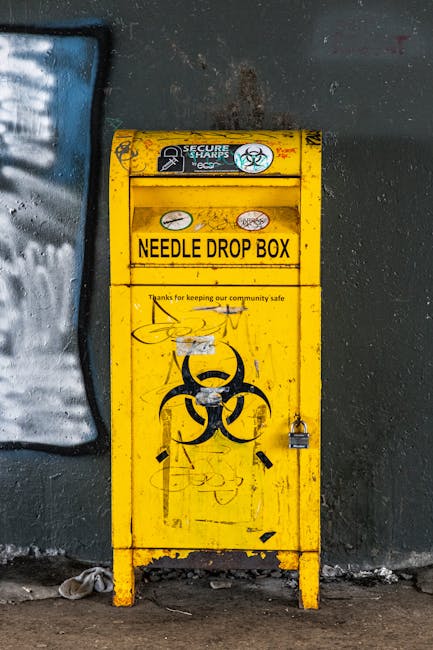
Wandsworth Council guide to hazardous waste disposal in Tooting
If you have paint tins in the shed, an old battery in a drawer, a leaking cleaning product under the sink, or a broken fluorescent tube tucked behind the boiler, you are not alone. Hazardous waste has a habit of hanging around after a clear-out, quietly becoming more awkward by the week. This Wandsworth Council guide to hazardous waste disposal in Tooting explains what counts as hazardous, what to do with it, what to avoid, and how to handle it without turning a small job into a messy one.
We will keep this grounded in real-life situations: a flat clearance after a tenancy, a garage that has become a chemical museum, or a home tidy-up where one strange item is holding everything up. The goal is simple. Help you dispose of hazardous waste safely, legally, and with as little fuss as possible.
Table of Contents
- Why Wandsworth Council guide to hazardous waste disposal in Tooting matters
- How Wandsworth Council guide to hazardous waste disposal in Tooting works
- Key benefits and practical advantages
- Who this is for and when it makes sense
- Step-by-step guidance
- Expert tips for better results
- Common mistakes to avoid
- Tools, resources and recommendations
- Law, compliance, standards, or best practice
- Options, methods, or comparison table
- Case study or real-world example
- Practical checklist
- Conclusion
- Frequently asked questions
Why Wandsworth Council guide to hazardous waste disposal in Tooting matters
Hazardous waste is different from ordinary household rubbish because it can harm people, property, or the environment if it is handled badly. That sounds obvious, but in practice many people still mix it into general waste because it is quicker. A cracked aerosol can, a half-used solvent tin, or leftover weed killer may not look dramatic. Yet these items can leak, react, or create risks during storage and transport.
In Tooting, where homes, flats, basements, lofts, and shared storage spaces can be tight, good disposal habits matter even more. One item sitting in a warm cupboard can make a whole room smell unpleasant. A misplaced battery can short out. A pile of old decorator's paint can turn a simple clearance into a safety headache. Let's face it, nobody wants that surprise on a Saturday morning.
This guide also matters because many people are unsure where council responsibilities end and household responsibility begins. The safest approach is to treat anything you are unsure about with a bit of caution, separate it from your usual waste, and check local guidance before moving it on. If you are clearing several rooms or handling a larger estate, the wider planning side often overlaps with services such as house clearance, home clearance, or even garage clearance when the problem has spread beyond one cupboard.
Practical takeaway: hazardous waste is usually less about volume and more about risk. A single small item can be more urgent than a whole black bag of ordinary rubbish.
How Wandsworth Council guide to hazardous waste disposal in Tooting works
The basic process is straightforward, though the detail changes depending on the item. First, identify what you have. Then separate it from normal household waste. After that, check which route is suitable: reuse, specialist collection, household disposal options, or a licensed waste service where appropriate.
For most people, the best workflow is:
- Sort the item into a safe, dry place away from children and pets.
- Read the label carefully if there is one. Product names and hazard symbols help more than people expect.
- Do not mix different chemicals together. Ever. Even if they seem similar.
- Keep original containers closed if possible.
- Pack breakable or leak-prone items in a sturdy box or tray.
- Choose the right disposal route rather than trying to "make do" with normal bins.
That last point is the important one. Hazardous waste should not be dumped into ordinary household bins, poured down drains, or left in public places. If the item forms part of a larger clear-out, a service such as waste removal can help with the non-hazardous side while the hazardous items are separated for the correct route.
There is also a planning side that people often miss. If you are clearing a flat, a loft, or an office, hazardous items tend to appear in the oddest places: behind filing cabinets, in old decorating boxes, under shelves, or mixed into forgotten furniture. That is why a methodical sort is worth the time. One careful pass can save three rushed ones later.
Key benefits and practical advantages
Doing hazardous waste disposal properly is not just about compliance. It is also about calm, convenience, and avoiding avoidable damage. A neat process gives you a cleaner space and fewer unpleasant surprises.
- Safer home environment: fewer leaks, fumes, or accidental spills.
- Lower fire risk: batteries, aerosols, and some chemicals can become dangerous if stored badly.
- Less stress during clear-outs: one separated box is easier to manage than a jumble of unknown items.
- Better for shared buildings: particularly useful in flats, basements, and communal bin stores.
- Cleaner results for trades and landlords: helpful after decorating, tenant changeovers, or end-of-lease tidy-ups.
For commercial spaces, the benefits are even more obvious. Offices, workshops, and small business premises often accumulate batteries, printer consumables, cleaning chemicals, and old electrical kit. That is where a more organised approach helps, alongside services such as business waste removal or office clearance when the overall project is bigger than the hazardous items alone.
There is a practical comfort in knowing the room is genuinely sorted, not just tidied into a corner. That feeling matters more than people admit.
Who this is for and when it makes sense
This guide is for homeowners, tenants, landlords, letting agents, small businesses, decorators, and anyone clearing out a property in Tooting or the wider Wandsworth area. If you have ever looked at an unfamiliar container and thought, "I probably should not put that in the normal bin," then yes, this is for you.
It makes sense in a few common situations:
- After decorating, when you have leftover paint, stripper, varnish, or solvent.
- During a garage or loft tidy-up, where old maintenance products turn up.
- After a tenancy ends and the property contains mixed waste from several occupants.
- When batteries, bulbs, or small electronics have piled up over time.
- After a move, when cupboards reveal things you forgot you owned.
If you are dealing with furniture that is contaminated, awkward, or mixed with other waste, it can help to separate what is reusable from what is not. Services like furniture disposal and furniture clearance are useful when the job includes standard household items too. A garden shed full of old cans, for instance, may need a different approach from a spare room packed with broken chairs and boxes.
And if the whole property is being reset, a broader flat clearance or loft clearance may be the cleaner way to handle the project from start to finish.
Step-by-step guidance
If you want to keep this simple, follow these steps. No drama, no guesswork.
- Identify the item. Look for labels, hazard symbols, manufacturer names, and any warnings about flammability, toxicity, or corrosive content.
- Separate it immediately. Put hazardous items away from general rubbish, food, and anything children or pets could reach.
- Do not decant unless you absolutely have to. Original containers are usually safer and easier to identify.
- Keep incompatible materials apart. For example, do not store acids with alkalis, and do not mix chemicals from different containers.
- Protect against leaks. Use a tray, box, or lined container if the item is cracked or likely to drip.
- Check local disposal options. Council or approved disposal routes vary by item type, so match the item to the right route.
- Schedule the larger clear-out separately if needed. Non-hazardous waste can usually be handled alongside a general clearance plan.
To be fair, the hardest part is often just starting. Once the first few items are sorted, the rest is much easier. You will notice the space feels calmer within minutes, even if the job is not fully done yet.
When the hazardous items are only one part of a bigger clearance, it may make sense to organise the rest through loft clearance, garage clearance, or even a full house clearance so the whole property is dealt with in one go.
Expert tips for better results
A few small habits make a surprisingly big difference. In our experience, the people who have the smoothest disposal process are not necessarily the ones with the fewest items. They are the ones who sort early and label clearly.
- Take a quick inventory first: jot down what you have before moving anything. A phone note is enough.
- Keep batteries taped where appropriate: especially loose terminals on small batteries, to reduce short-circuit risk.
- Store items upright: especially liquids and aerosols, so they are less likely to leak or spray.
- Use daylight for sorting: a bright afternoon by the kitchen window can help you spot labels you missed earlier. It sounds small, but it helps.
- Photograph unclear items: useful if you need to check them against disposal guidance later.
- Plan for the ordinary waste too: many jobs need both hazardous disposal and standard clearance. Separate the streams cleanly.
One practical trick: put a temporary "do not bin" box near the exit of the room you are clearing. It catches the odd items that would otherwise end up in the wrong pile. It saves a lot of second-guessing.
If you are handling a workplace or multi-room property, you might also want to review health and safety policy information and make sure your own handling practices are cautious enough for the setting. Not glamorous, but useful.
Common mistakes to avoid
Most hazardous waste mistakes are very ordinary. That is the awkward part. They happen because people are busy, not because they are careless.
- Mixing different substances together: this is the big one. It can create fumes, heat, or reaction risks.
- Putting hazardous waste in general rubbish: it may look harmless, but collection crews and sorting facilities face the risk later.
- Leaving items in hot lofts or damp sheds: temperature changes and moisture can cause containers to fail.
- Ignoring damaged packaging: a cracked tin is not the same as a sealed one.
- Assuming all electrical items are the same: some are routine e-waste, but damaged batteries or contaminated electronics need more care.
- Waiting until the last minute: rushed disposal is how things get mixed up.
There is another subtle mistake: overconfidence. People sometimes assume a product is "only a bit old" or "nearly empty," so it must be fine. Not necessarily. Even small amounts of residue can matter, especially in confined spaces.
For builders or renovators, the risk is even higher because leftover materials can get buried under rubble, packaging, and offcuts. If the project includes construction debris as well as hazardous items, a focused builders waste clearance approach may be the cleaner starting point.
Tools, resources and recommendations
You do not need fancy equipment to manage most domestic hazardous waste, but a few basic tools help a lot.
- Sturdy gloves for handling rough or dusty items.
- Seal-able boxes or plastic tubs for separating items.
- Marker pens and tape for clear labelling.
- Old towels or absorbent material for minor leaks.
- A checklist on paper or phone so nothing gets forgotten.
From a service perspective, the most useful resources are often the ones that reduce confusion. Clear pricing, insurance information, and sustainability details all help you decide who to trust. If you want to understand how a provider approaches care and accountability, pages like insurance and safety, pricing and quotes, and recycling and sustainability are worth a look.
That is especially true where waste streams are mixed and time is tight. A good provider should be able to explain what they can take, what they cannot, and how the non-hazardous part of the job will be handled. Clear answers beat vague promises every time.
Law, compliance, standards, or best practice
Hazardous waste should be handled cautiously and in line with the relevant UK rules and local council expectations. The exact route depends on the item, its condition, and whether it came from a household or a business setting. If you are unsure, treat uncertainty as a signal to slow down rather than push ahead.
Best practice usually means:
- keeping waste separated by type;
- avoiding unsafe storage conditions;
- not mixing household and trade waste without checking the rules;
- using appropriately licensed services where the waste stream requires it;
- maintaining a basic record of what was removed if the waste comes from a business, landlord, or managed property.
If you are dealing with business premises, landlords should be especially careful about duty of care. It is not just about getting rid of items. It is about knowing where they went and ensuring they were managed properly. A sensible office or commercial clean-up may combine business waste removal with a more detailed internal sort so the hazardous portion does not get lost in the shuffle.
Truth be told, compliance sounds dry until you need it. Then it becomes very interesting, very quickly.
Options, methods, or comparison table
Different disposal routes suit different situations. Here is a practical comparison to help you choose.
| Method | Best for | Strengths | Limitations |
|---|---|---|---|
| Separate home sorting | Small amounts of household hazardous waste | Low cost, simple, keeps you in control | Requires patience and careful handling |
| Council-aware disposal route | Items accepted through local household waste processes | Good for one-off items and common domestic waste | May have item restrictions or booking rules |
| Specialist waste service | Mixed, bulky, or higher-risk waste streams | Convenient, efficient, less stress | Usually more expensive than self-sorting |
| Full property clearance with separation | Large clear-outs in houses, flats, lofts, or garages | Best for speed and organisation across multiple rooms | Needs a clear plan to isolate hazardous items |
For many people in Tooting, the smart choice is a hybrid one: separate hazardous items carefully, then deal with the rest through a wider clearance service. That keeps the job manageable without cutting corners.
Case study or real-world example
A typical Tooting scenario goes like this. A family is clearing an old terrace property after years of gradual clutter. In the garage, they find half-used paint, rusty tools, old garden chemicals, a loose battery charger, and a couple of cracked bulbs. The room smells faintly of dust and damp cardboard. Nothing dramatic, but enough to make people hesitate.
Instead of throwing everything into one pile, they sort the room into three groups: safe reusable items, ordinary waste, and hazardous items. The hazardous group goes into a separate box with labels. The furniture and household clutter are cleared out as part of a broader home clearance, while the risky items are kept apart for the correct disposal route. The result is a calmer, cleaner space and far less back-and-forth.
What made the difference? Not specialist gear. Just a bit of discipline and a sensible order of work. The family started with the obvious items, then moved through the rest methodically. By the end of the afternoon, they were not looking at a "project" anymore. They were looking at an empty garage and, honestly, a bit of relief.
Practical checklist
Use this before you move anything into the bin or out of the property.
- Have I identified the item correctly?
- Does it have a label, warning symbol, or product name?
- Is it stored away from food, children, and pets?
- Have I kept it separate from ordinary rubbish?
- Is the container sealed and upright?
- Could this item react with another substance nearby?
- Do I need gloves, a tray, or a stronger box?
- Is this a household item or business waste?
- Do I need a larger clearance for the rest of the property?
- Have I checked the safest local disposal route before moving it on?
If you can answer "yes" to most of those, you are on the right track. If not, pause. A short pause now is better than a messy cleanup later.
Get a free quote today and see how much you can save.
Conclusion
Hazardous waste disposal in Tooting does not need to be complicated, but it does need to be done properly. The key is to identify risky items early, keep them separate, and choose the right route rather than forcing them into normal waste. That one habit protects your home, your neighbours, and the people handling waste after you.
If your situation is bigger than a few items in a cupboard, it often helps to deal with the wider clear-out at the same time and leave the hazardous part in its own lane. That keeps everything safer and much less stressful. And once the room is clear, you really do feel it - the space, the air, the whole mood of the place.
Take it one step at a time. That is usually enough.
Frequently Asked Questions
What counts as hazardous waste in a home?
Common examples include paint, solvents, cleaning chemicals, pesticides, batteries, fluorescent bulbs, aerosols, and some electrical items with damaged components. If it can leak, burn, react, or release harmful substances, treat it carefully.
Can I put hazardous waste in my normal bin?
No, not in general. Ordinary household bins are not the right route for items that may be flammable, toxic, corrosive, or reactive. Separating the waste first is the safer approach.
What should I do with old paint tins?
Keep them closed if possible, store them upright, and separate them from normal rubbish. If the tins are leaking or badly damaged, place them in a secure container and use a suitable disposal route rather than forcing them into general waste.
Are batteries considered hazardous waste?
Yes, many batteries should be treated as hazardous or special waste because they can short-circuit, overheat, or leak. Tape exposed terminals where appropriate and keep them away from metal objects.
Can I mix different chemicals together to save space?
No. Mixing chemicals is risky and can create fumes, heat, or dangerous reactions. Keep each substance in its own container and never assume similar products are safe together.
What if I do not know what a container holds?
Do not open it casually or pour it out. Keep it sealed, isolate it from other waste, and look for labels or identifying marks. If it remains unclear, handle it cautiously and seek the safest disposal route available.
Is hazardous waste disposal different for landlords and businesses?
Yes. Commercial and rental settings usually require more care because there can be duty of care responsibilities, record-keeping needs, and mixed waste streams. A business or landlord should be especially careful not to mix waste types without checking the right process.
What is the safest way to store hazardous waste before disposal?
Keep it in a cool, dry place away from food, heat sources, and children. Use the original container where possible, keep lids closed, and place anything damaged into a box or tray that can catch leaks.
Can hazardous items be collected with other clearance waste?
Sometimes the wider clearance can be handled together, but hazardous items still need to be separated and managed correctly. A combined plan often works best for homes, flats, lofts, garages, or offices where clutter and risk are mixed together.
How do I know whether I need a specialist service?
If the waste is bulky, badly contaminated, leaking, mixed with other debris, or part of a larger clearance, a specialist or experienced waste service is often the most practical option. When in doubt, choose the route that reduces handling risk.
What is the difference between waste removal and clearance?
Waste removal is usually focused on taking away rubbish or unwanted items. Clearance is broader and often includes sorting, loading, and removing everything from a room, loft, garage, or property. For mixed jobs, the two often work together.
How can I make a hazardous waste job quicker and easier?
Sort items early, keep them separated, label them clearly, and deal with ordinary waste at the same time through a structured clearance plan. A bit of order at the start saves a lot of mess later.